

Problem & Solution
Micro-soldering and BGA reballing on modern smartphone logic boards require precise thermal control to avoid damaging heat-sensitive integrated circuits (ICs) and multi-layer PCBs.
Using general-purpose high-temperature or non-eutectic solder formulas can lead to thermal stress, board warping, or cold solder joints due to uneven melting ranges.
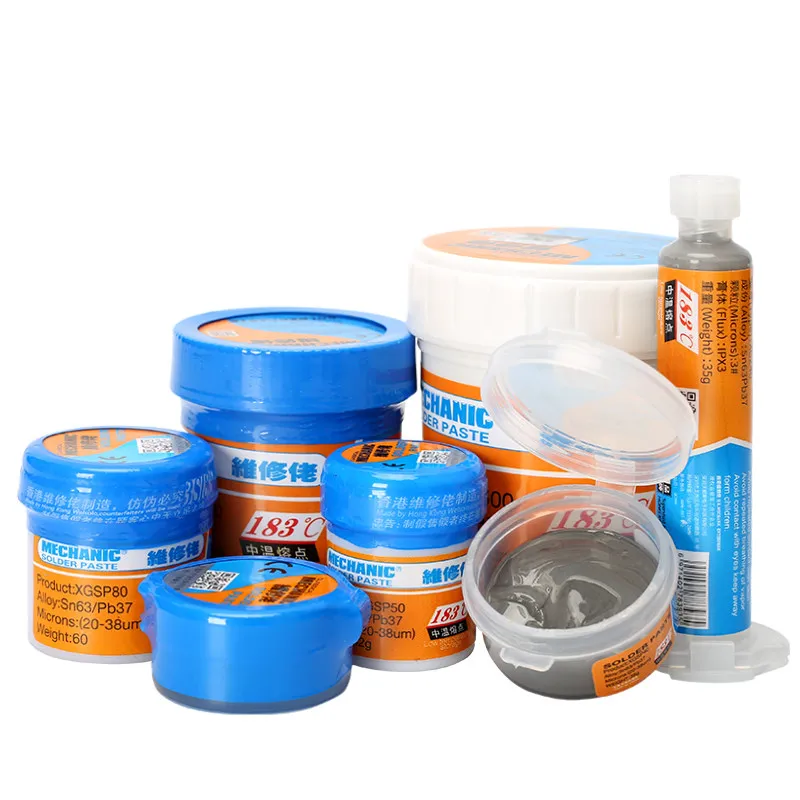
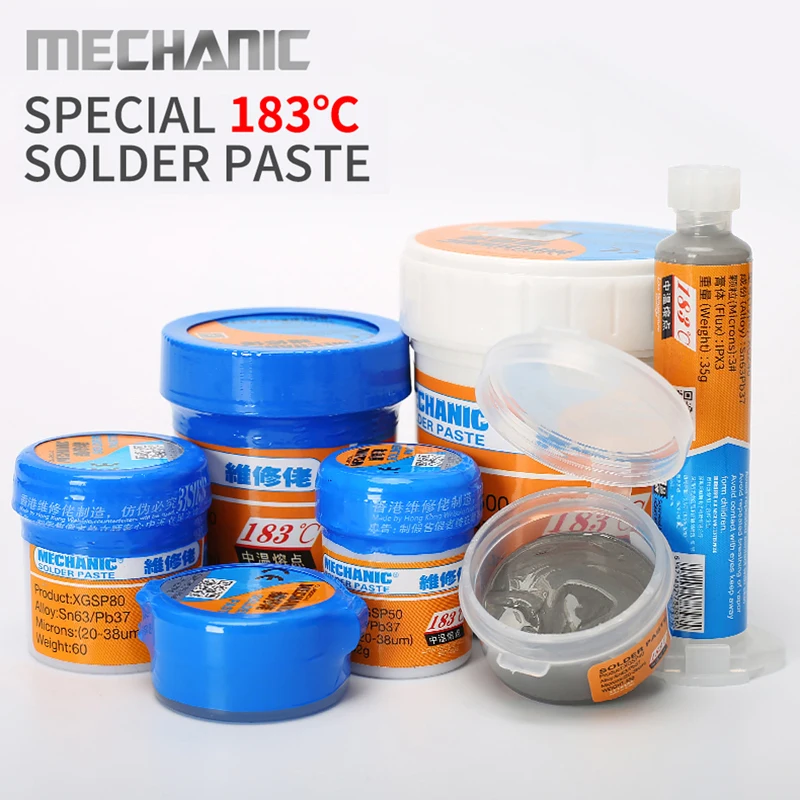
The MECHANIC 183℃ XGZ40 Solder Paste addresses this challenge by utilizing an Sn63/Pb37 alloy matrix with a sharp eutectic melting point at 183℃. Combined with built-in flux, it simplifies precise component reflow and BGA stencil application during phone repair tasks.
Who Is It For?
Designed for smartphone logic board repair technicians, micro-soldering professionals, and BGA reballing specialists who require a predictable 183℃ melting solder paste.
It is also suitable for hardware hobbyists working on fine-pitch SMD micro-electronics rework where Sn63/Pb37 solder characteristics are preferred.
Key Features
- 183℃ Eutectic Melting Pointsharp liquidus transition minimizes thermal exposure on sensitive phone ICs and CPUs during hot-air reflow.
- Sn63/Pb37 Alloy Compositionstandard 63% Tin / 37% Lead ratio provides predictable joint flow and high mechanical stability.
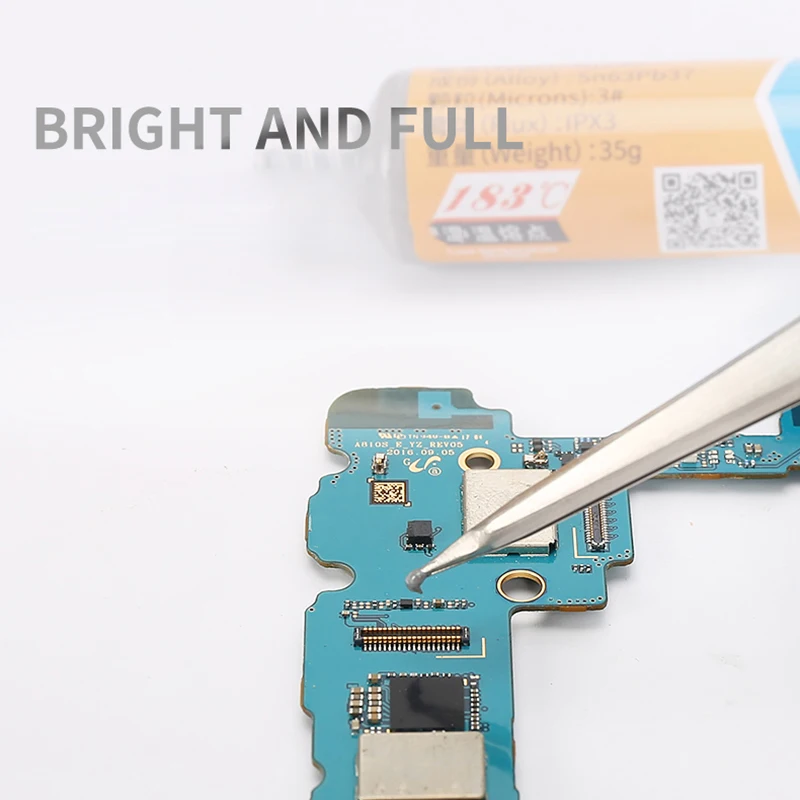
- Integrated Flux Matrixcleans metal surfaces during heating to improve tin wetting and reduce solder bridging.
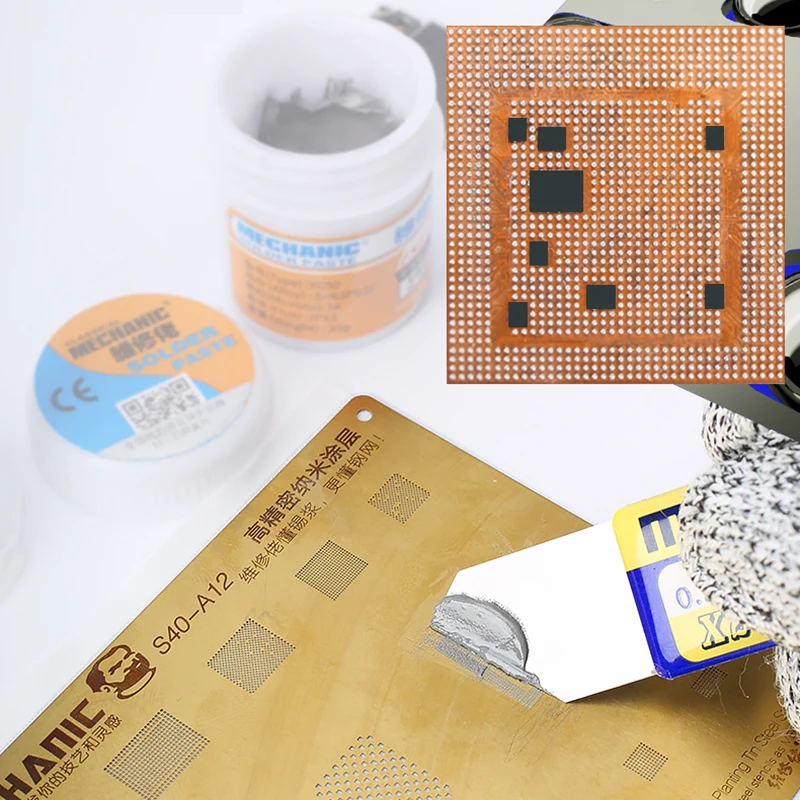
- BGA & SMD Micro-Soldering Focusoptimized consistency for stencil application, reballing chips, and surface-mount soldering.
- Suitable for Mobile PCB Reworkdesigned to address common phone repair needs, including IC replacement and trace bridge repairs.
Technical Specifications
| Brand / Model | MECHANIC XGZ40 |
| Melting Point | 183℃ |
| Alloy Composition | Sn63 / Pb37 (63% Tin, 37% Lead) |
| Flux Inclusion | Integrated solder flux paste |
| Primary Application | Mobile phone IC, CPU, BGA, SMD micro-soldering |
| Lead-Free (RoHS) | No (contains lead) |
| Net Volume / Weight | Not specified in available data |
Pros & Cons
Pros
- Sharp 183℃ eutectic transition helps reduce thermal shock to delicate smartphone circuit boards.
- Sn63/Pb37 formula promotes reliable wetting and bright solder joint formation.
- Integrated flux simplifies micro-soldering tasks without requiring separate flux application for basic reflow.
Cons
- Contains lead (Pb37), which requires adequate fume extraction and compliance with local safety regulations.
- Container weight or exact net volume is not specified in available product details.
- Requires refrigeration or controlled storage temperature to maintain flux consistency and avoid phase separation.
FAQ
It features an Sn63/Pb37 alloy with a eutectic melting point of 183℃.
Yes, its 183℃ melting point and integrated flux composition are designed for micro-soldering operations including BGA IC and CPU reballing.
Yes, it contains 37% lead (Sn63/Pb37 formula), meaning proper safety precautions and fume extraction must be used.
The exact net weight or volume in grams/milliliters is not explicitly specified in the available product data.
Final Verdict
A dedicated tin solder paste for electronics repair technicians who require standard Sn63/Pb37 alloy performance at 183℃ for BGA and SMD rework. Skip if your workspace requires lead-free (RoHS) compliant pastes.