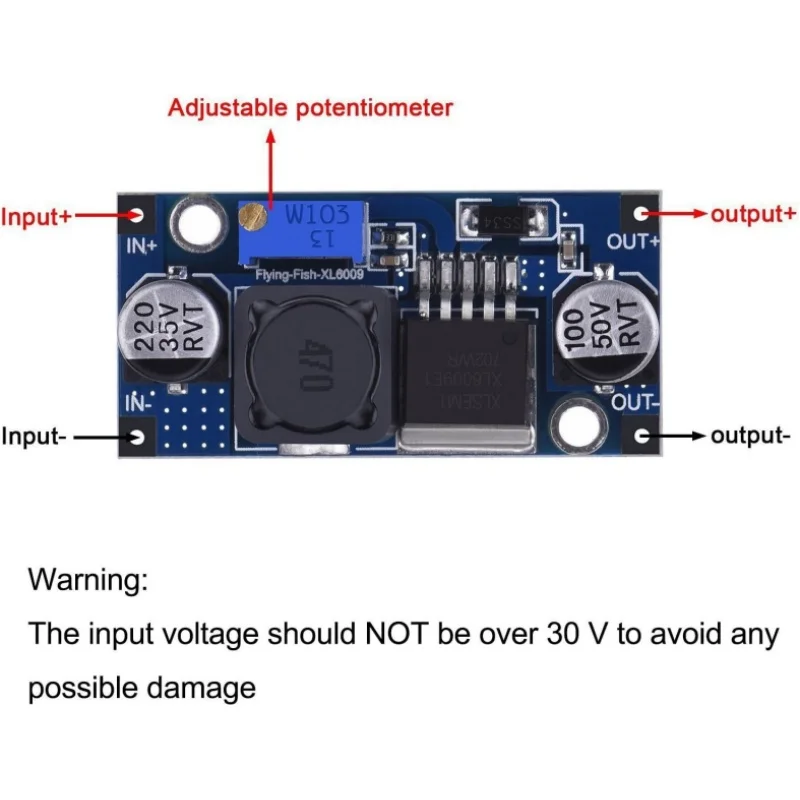
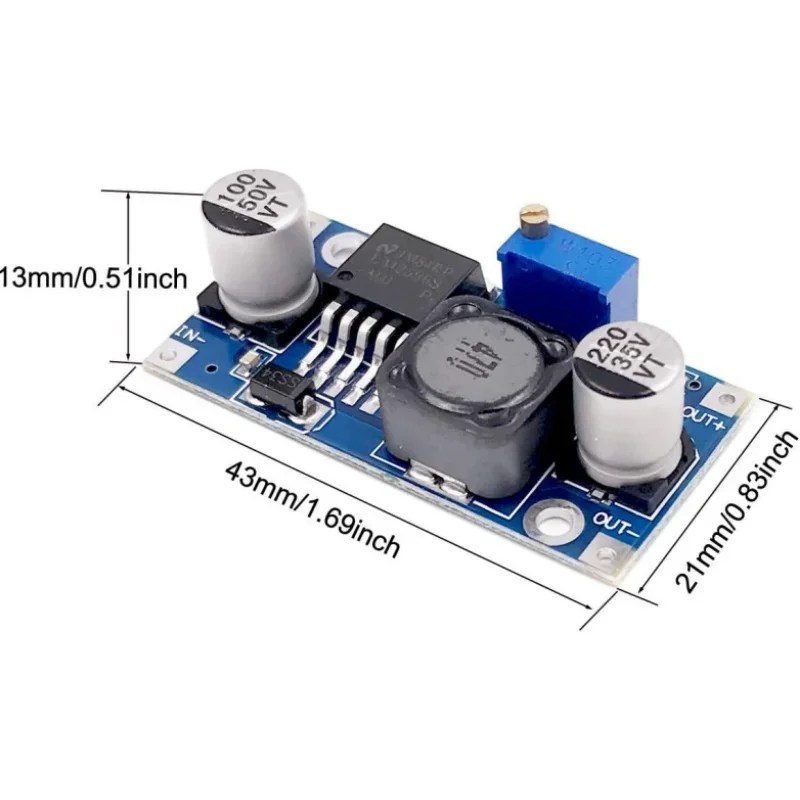
LM2596 DC-DC Buck Converter Review: Step-Down Power Module
Problem & Solution
Powering custom electronics projects often presents a voltage mismatch challenge. A common scenario involves running 5V microcontrollers, 3.3V sensors, or 12V LED strips from a higher-voltage power source such as a 24V industrial supply or a 36V battery bank. Using standard linear regulators leads to excessive heat generation and energy waste, especially under substantial voltage drops.
The LM2596 DC-DC Buck Converter module solves this problem by providing efficient switching step-down voltage regulation. It takes a higher direct current input voltage (3.0V to 40V) and steps it down to a user-adjustable lower output voltage (1.5V to 35V), making it a flexible power management component for custom circuits and prototyping.
Who Is It For?
This step-down module is designed for DIY electronics hobbyists, makers, robotics builders, and technicians who need a reliable, adjustable DC voltage step-down solution. It is ideal for project prototyping, custom LED power setups, automotive accessory step-down circuits, and micro-controller bench testing.
Key Features
- Wide Input Voltage Range (3.0V to 40V DC)Allows power integration from various DC sources including batteries, power bricks, and solar setups.
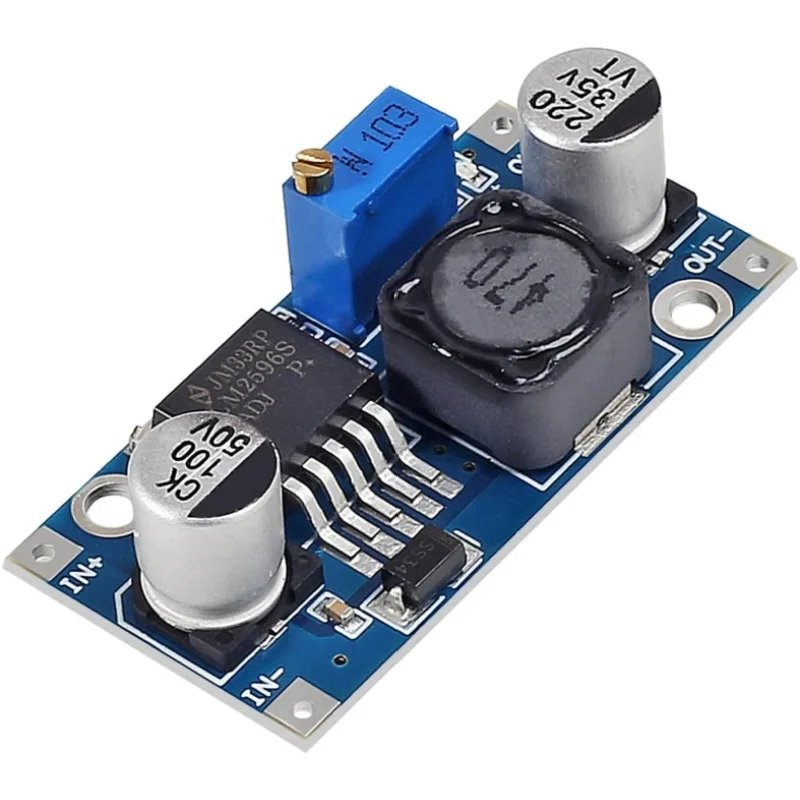
- Adjustable Output Voltage (1.5V to 35V DC)Flexible tuning using the onboard multi-turn precision potentiometer to match exact circuit requirements.
- Buck (Step-Down) Switching ArchitectureEfficient voltage reduction compared to standard linear regulators, generating less waste heat during conversion.
- Compact Module FootprintEasily integrates into tight project enclosures, custom PCBs, or breadboard bench setups.
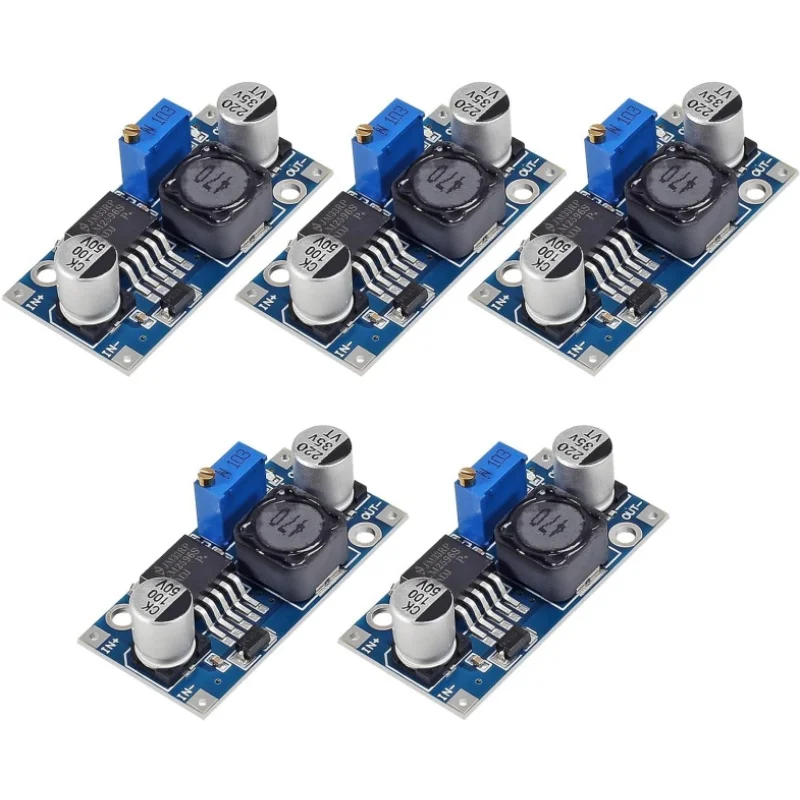
- Multi-Pack Quantity Options (1, 5, or 10 PCS)Provides purchasing flexibility whether you need a single replacement unit or multiple modules for bulk projects.
Technical Specifications
| Module Type | DC-to-DC Step Down (Buck) Converter |
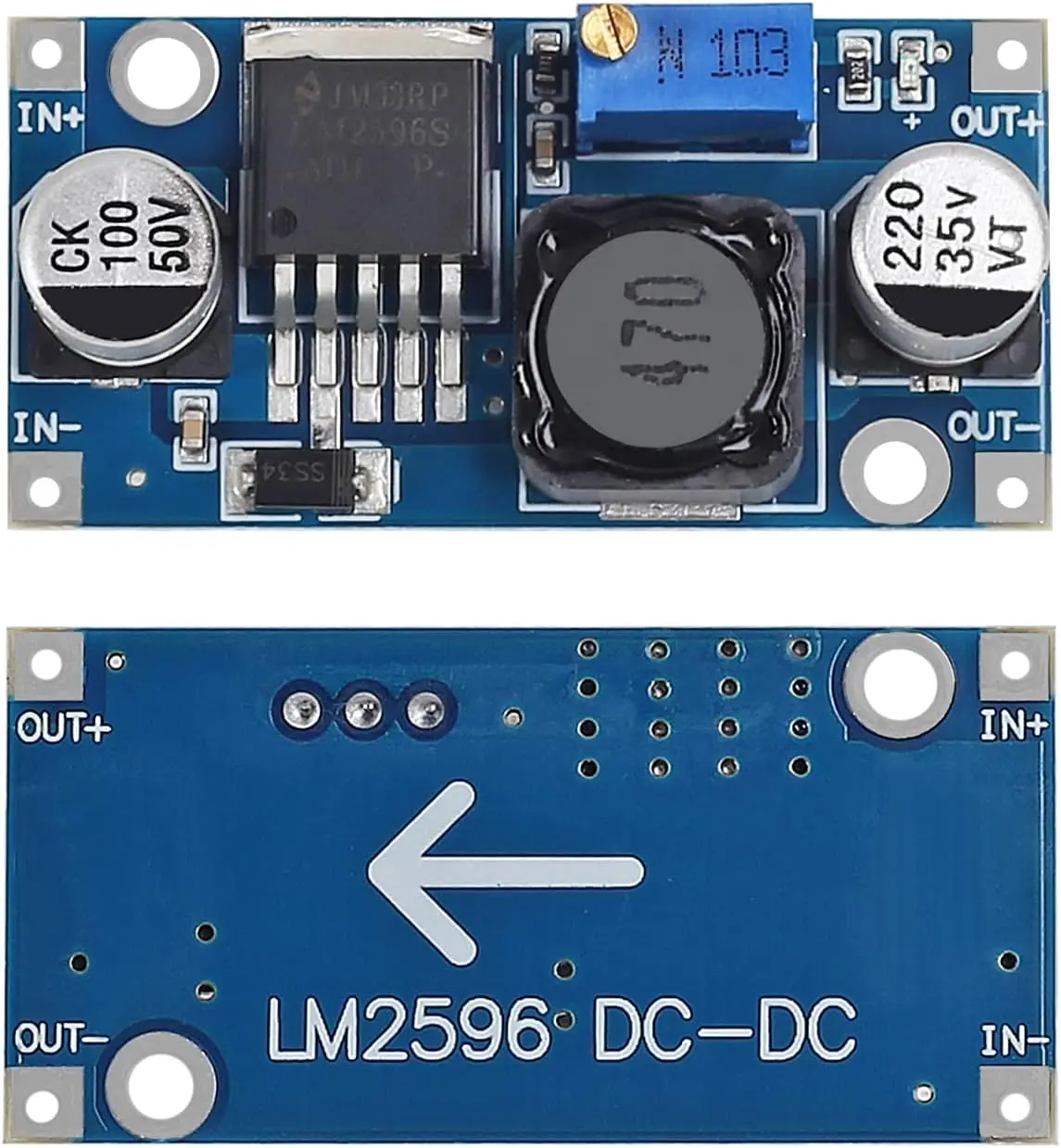
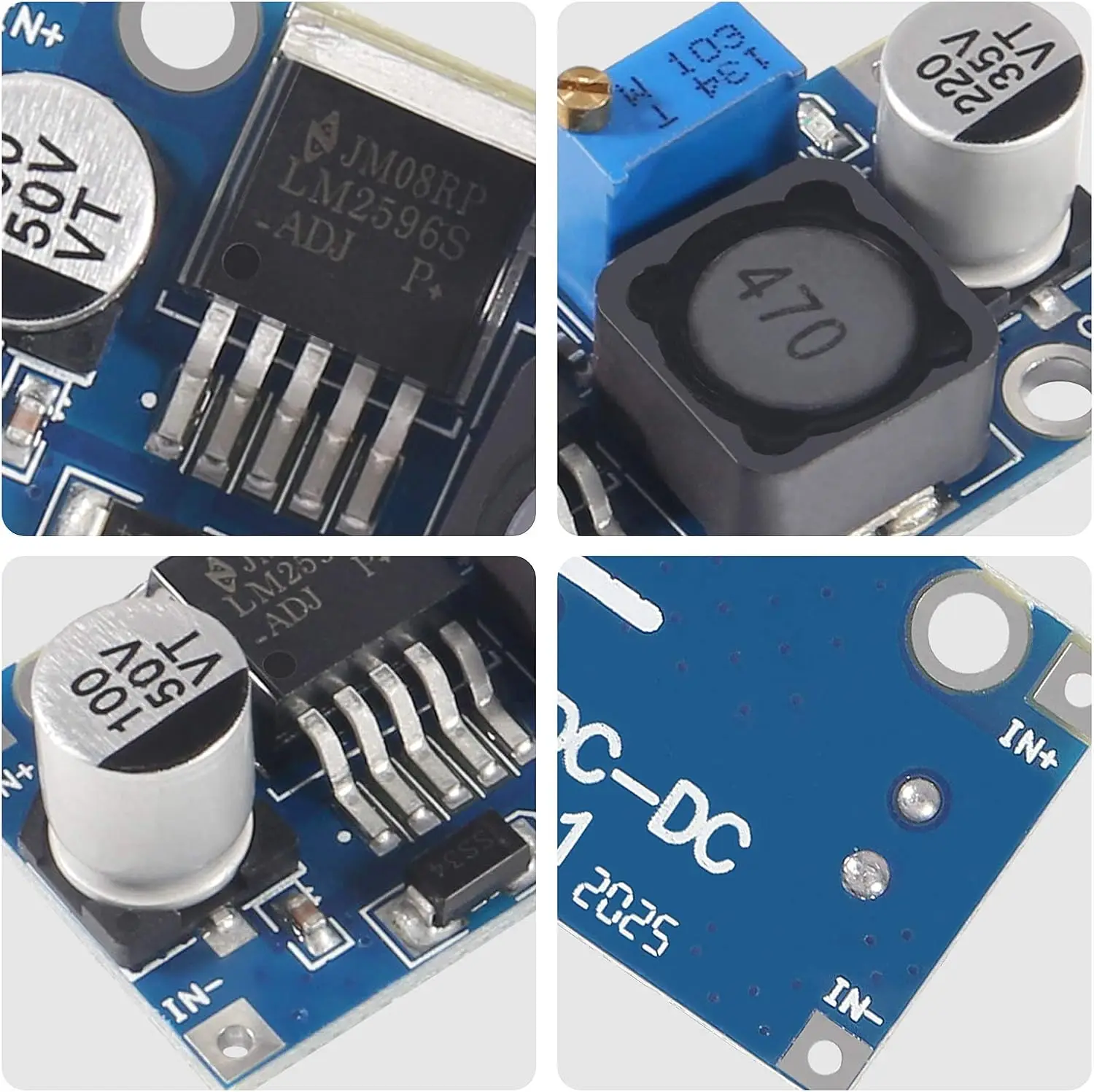
| Control IC | LM2596 / LM2596S |
| Input Voltage Range | 3.0V to 40V DC |
| Output Voltage Range | 1.5V to 35V DC (Adjustable) |
| Differential Voltage Requirement | Input must be ~1.5V higher than output minimum |
| Adjustment Mechanism | Onboard Multi-Turn Precision Potentiometer |
| Package Options | 1PC / 5PCS / 10PCS sets |
Pros & Cons
Pros
- Versatile input-to-output voltage adjustment range for broad project compatibility.
- Onboard multi-turn trimmer allows fine output voltage adjustment.
- Available in 1, 5, or 10 piece pack options to suit different project quantities.
- Compact switching regulator circuit suitable for space-constrained enclosures.
Cons
- Step-down functionality only; cannot step up voltage if input falls below target output.
- Requires input voltage to remain at least ~1.5V higher than desired output voltage.
- Must be calibrated with a multimeter prior to connecting sensitive output loads.
FAQ
No. The LM2596 is strictly a step-down (buck) switching converter. The input voltage must always exceed the desired output voltage by at least 1.5V.
Output voltage is adjusted manually using a small precision flathead screwdriver to turn the brass screw on the blue multi-turn potentiometer while measuring output with a multimeter.
The module accepts an input voltage ranging from 3.0V to 40V DC and delivers an adjustable output voltage from 1.5V to 35V DC.
Heat sink inclusion is not explicitly stated in the module data. Buyers planning high continuous current applications should verify package contents or supply auxiliary thermal protection.
Final Verdict
Recommended for electronics hobbyists and circuit designers requiring an adjustable DC-DC step-down power module. Skip this model if your application requires stepping up voltage or integrated digital voltage readouts. Always measure the output voltage with a multimeter prior to connecting delicate microelectronics.